Advice from a Turtle
Slowwww Dowwwwn...

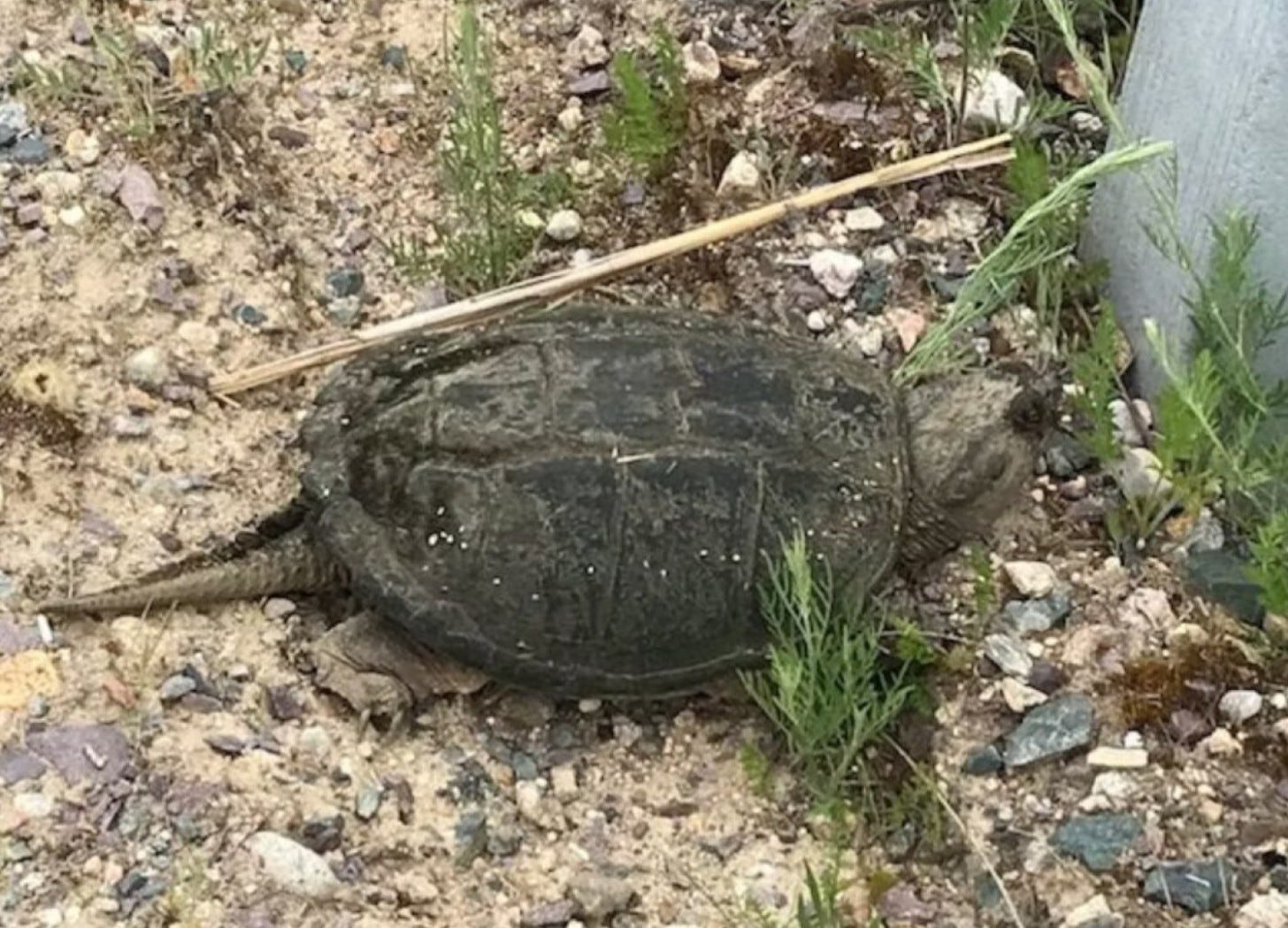
One morning, as my husband and I were walking along a busy bike path, a snapping turtle crawled up over the embankment and proceeded to cross in front of us. The ancient looking creature moved slowly, steadily and deliberately. It walked step by step, moving one foot forward at a time. Bikers and walkers stopped to watch in fascination until it reached to other side. We were all enchanted.
The snapping turtle family, Chelydridae, evolved in North America and has inhabited our wetlands for nearly 90 million years, whereas humans have been walking the Earth for a mere 200,000 years. With its deeply wrinkled skin and hard weathered shell, the Common Snapping Turtle, Chelydra sepentina, speaks an ancient wisdom and reminds us to slow down and appreciate the journey of life.
“Nature never hurries, yet everything is accomplished.” These wise words are attributed to Lau Tzu, ancient Chinese philosopher and founder of Taoism. By slowing down, one can actually accomplish more – minimizing stress, making fewer mistakes, thinking more clearly, and acting with deeper insight, greater purpose, and more care.
Common snapping turtles live in freshwater ponds, streams, lakes, rivers, swamps, and sometimes brackish waters. They eat aquatic plants, fish, frogs, and insects. Clean water is essential for the health and survival of snapping turtles and for the aquatic species they eat. Exposure to pollutants like heavy metals, pesticides, sewage, or forever chemicals can lead to problems such as weakened immune systems, stunted growth, and even reproductive failure.
When humans get caught up in the fast lane, they come under pressure and make hasty decisions, often thoughtless ones. They lose complete perspective and become more careless. They get so caught up in their performance goals - produce more, sell more, earn more - that they fail to see the harm of their activity. Water pollution is one of many manifestations of this kind of human carelessness.
My mission as a Storywalker is to encourage people to get outdoors, slow down, be present, be mindful, and connect with the world that sustains them. Then maybe they can reflect on these experiences, learn from them, and write their own meaningful stories.
Story Walking begins when we step outside into green space. The magic of story walking can happen in a park, a community garden, or a cemetery. It can happen on a tree-lined city street, a woodland trail, or a bike path.
I took a slow walk earlier today, after attending church and before publishing this post. The air was cold and crisp, and the sky was a pure blue. I inhaled the clean air and thought about the hundreds of single-use styrofoam coffee cups that were being tossed into the church garbage this Sunday. The words “Creation Care” came to me and, at the very same moment, a leaf came flying down, and its stem struck me in the heart. It felt like a message from God saying, “Yes, these are the words you need you to convey. Creation Care.”
I stooped down to pick up the leaf and examined it in wonder. The shape reminded me of the head of a snapping turtle, with its sharp beak of a mouth and prominent nose. And this truly surprised me, because I was about to publish this post.
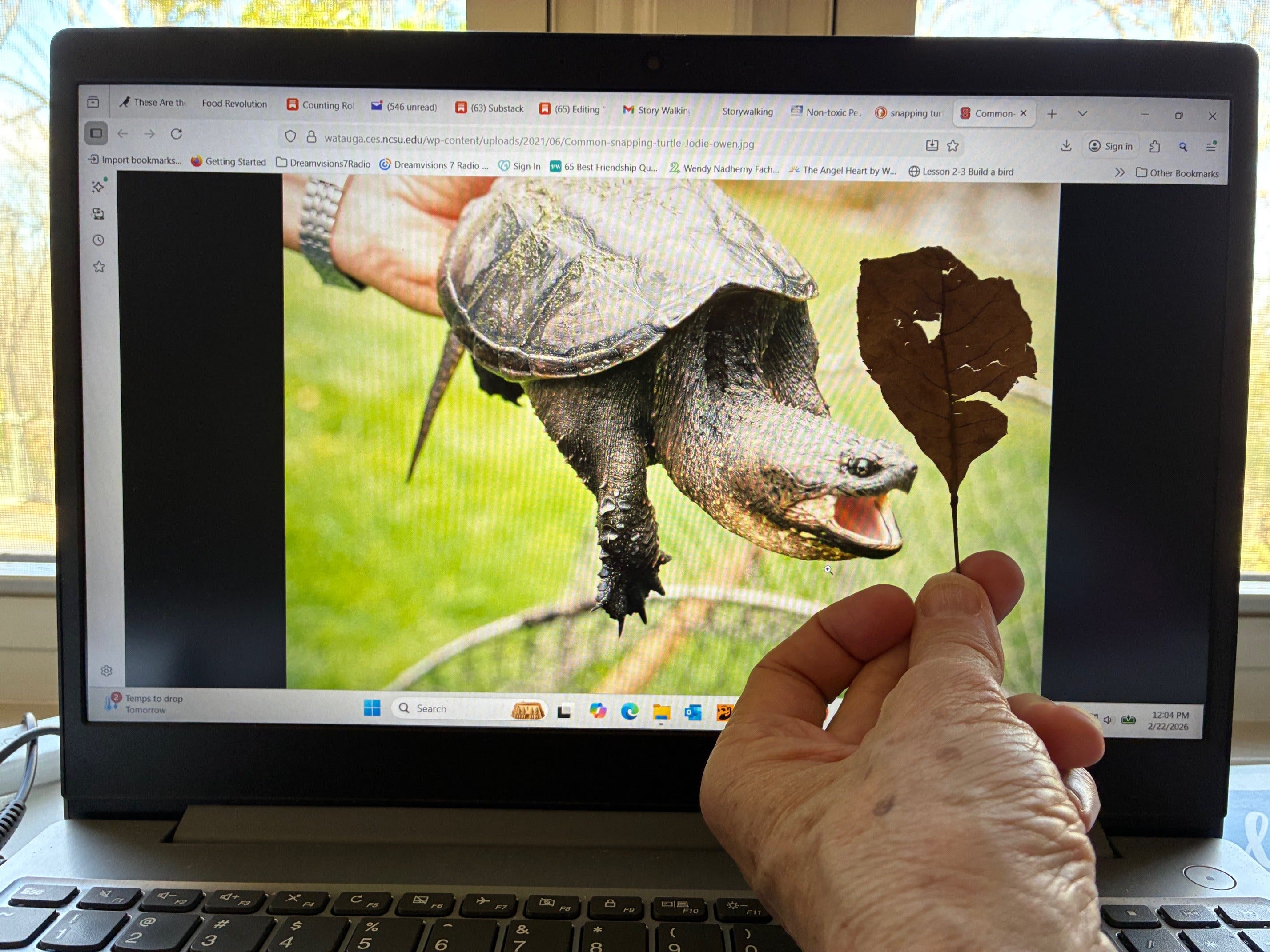
I walked on and caught an overwhelming whiff of dryer sheets. It obliterated the clean scent of fresh air. The snapping turtle relies on its sense of smell more than it senses of sight and sound, and I could imagine how a turtle would turn up its nose at this smell. This got me wondering, and upon returning home, I researched dryer sheet ingredients. The Environmental Working Group states that dryer sheets have all kinds of chemicals in them that are dangerous to the world around you both inside and outside of the home.
I learned a few new things today, like… avoid toxic, unrecyclable dryer sheets and make your own dryer balls, which you can reuse over and over again. Try putting a few drops of pure essential oils inside an old wool sock. Something you find pleasant - lavender or lemon, for instance. Tightly roll up the sock to form a ball. Add a few drops into a second sock. Place the first sock inside a second sock, and cuff it over itself a few times to form a larger ball. Repeat with a third and fourth sock, if needed, and roll the socks as tight as possible.
Creation Care involves making informed choices about everyday household products. I’ll be talking about this with my next podcast guest.
Take time to write about the world you see.
Step away from your screen. Right now. Go take a slow walk. For ten minutes or an hour. Tune into the outside world. Then, come back, sit back down, reflect, and share something about your walk in the comments section.
What happened?
What did you notice?
What did you wonder about?
Any ah-ha moments?
How did your mood shift?
How did your energy shift?
Just curious!
Wendy Nadherny Fachon is host of the Story Walking Radio Hour and author of The Angel Heart.
Hi Wendy, I love this article and the symbolism you draw from nature. I love also the synchronistic message you received through the falling leaf. 🍂 There is so much for us to see and experience if we take the time. What you write about is important. We definitely need to pay attention to our effect on the world, people and creatures around us.